
Youth Group Bible Reading Plans & Challenges
TLDR: Fresh Fire helps youth pastors turn sermons and ministry themes into editable Bible Reading Plans and faith challenges. Leaders can add Scripture, videos, questions, reflections, and practical challenges, assign the content to students, and see who is participating throughout the week.
Turn Your Sermon Into a Week of Discipleship
Give students a way to engage with Scripture and put their faith into practice beyond youth group.
With Fresh Fire, youth pastors can create, customize, and assign Bible Reading Plans and Challenges—then see how students are engaging along the way.
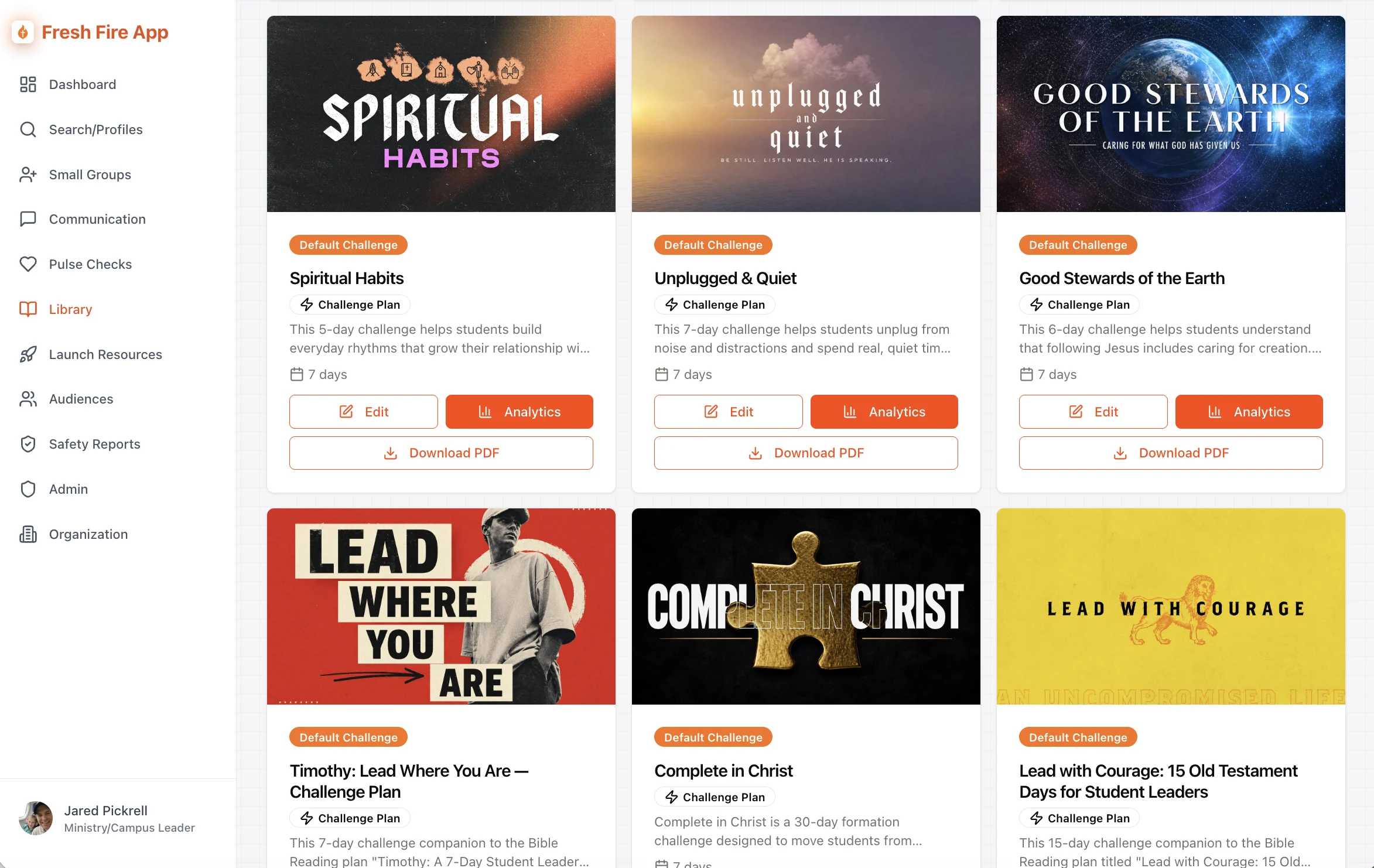
Start With Ready-to-Use Content or Create Your Own
You don’t have to start from scratch.
Fresh Fire provides ready-to-use Bible Reading Plans and Challenges to help your youth group get started. Our content is gospel-focused, rooted in Scripture, and centered around the major themes of the Bible without a denominational leaning.
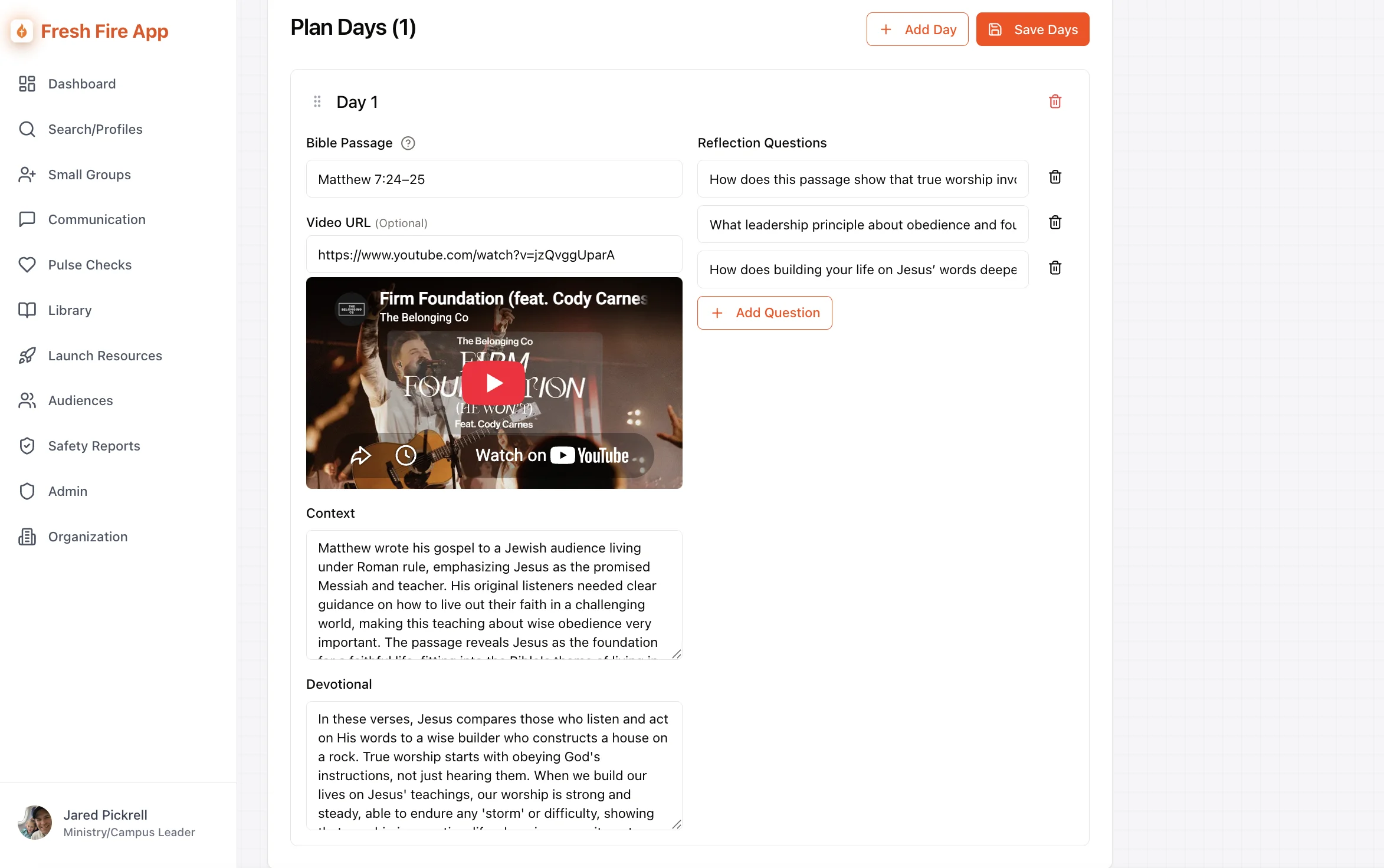
Or build your own around what your students are learning.
Add your own graphics, videos, Scripture, questions, challenges, and sermon notes. You can even drop in your sermon notes and let AI create a rough draft for you to edit and make your own.
You bring the teaching. Fresh Fire helps you turn it into a plan students can engage with all week.
Assign Plans and Track Student Engagement
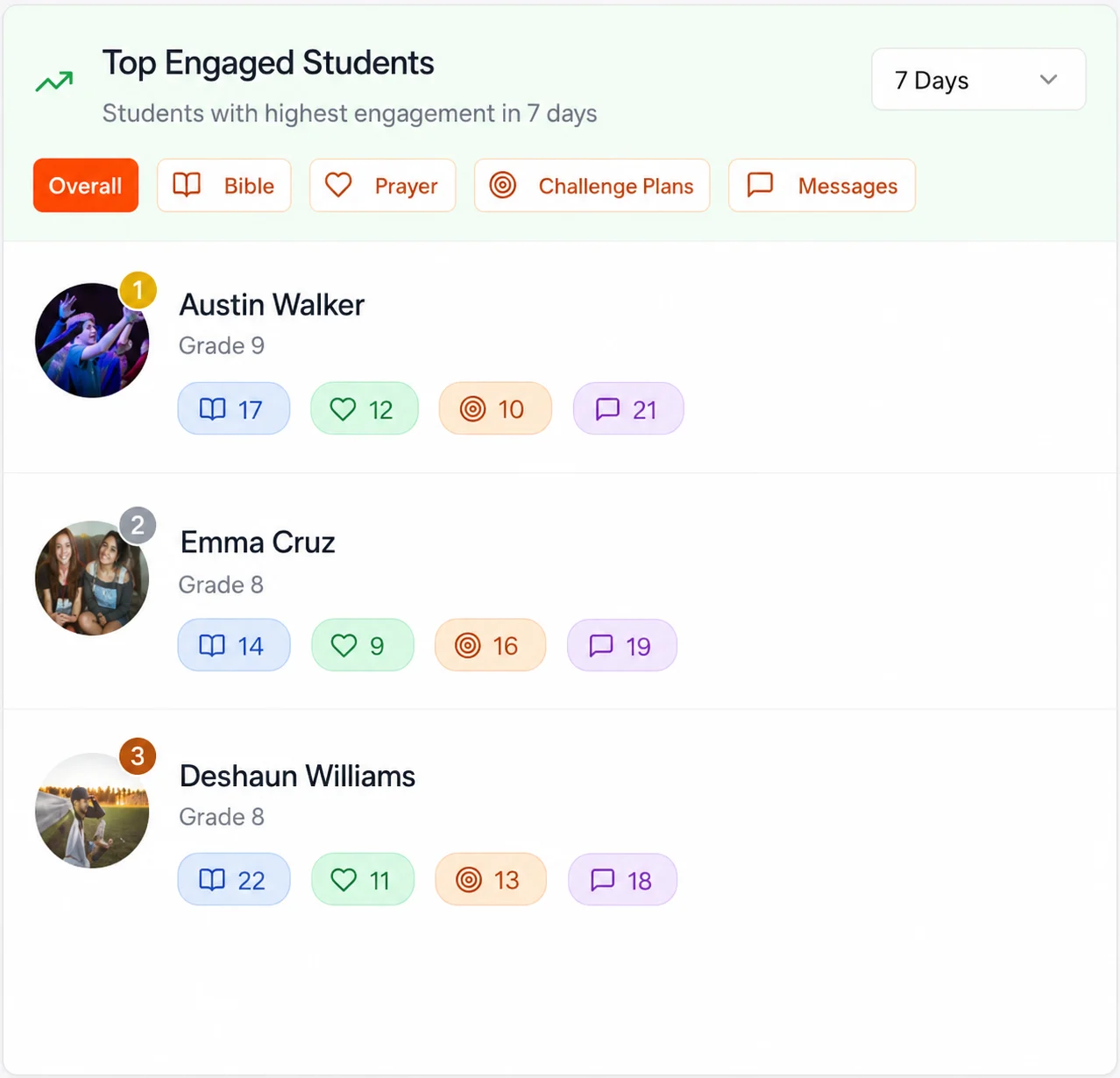
Put your plans and challenges directly in front of your students.
Assign them to your youth group and see who’s participating and completing them. Instead of wondering whether students are engaging, you can see who’s taking the next step and follow up when needed.
It gives youth pastors a simple way to connect what happens at youth group with what happens throughout the week.
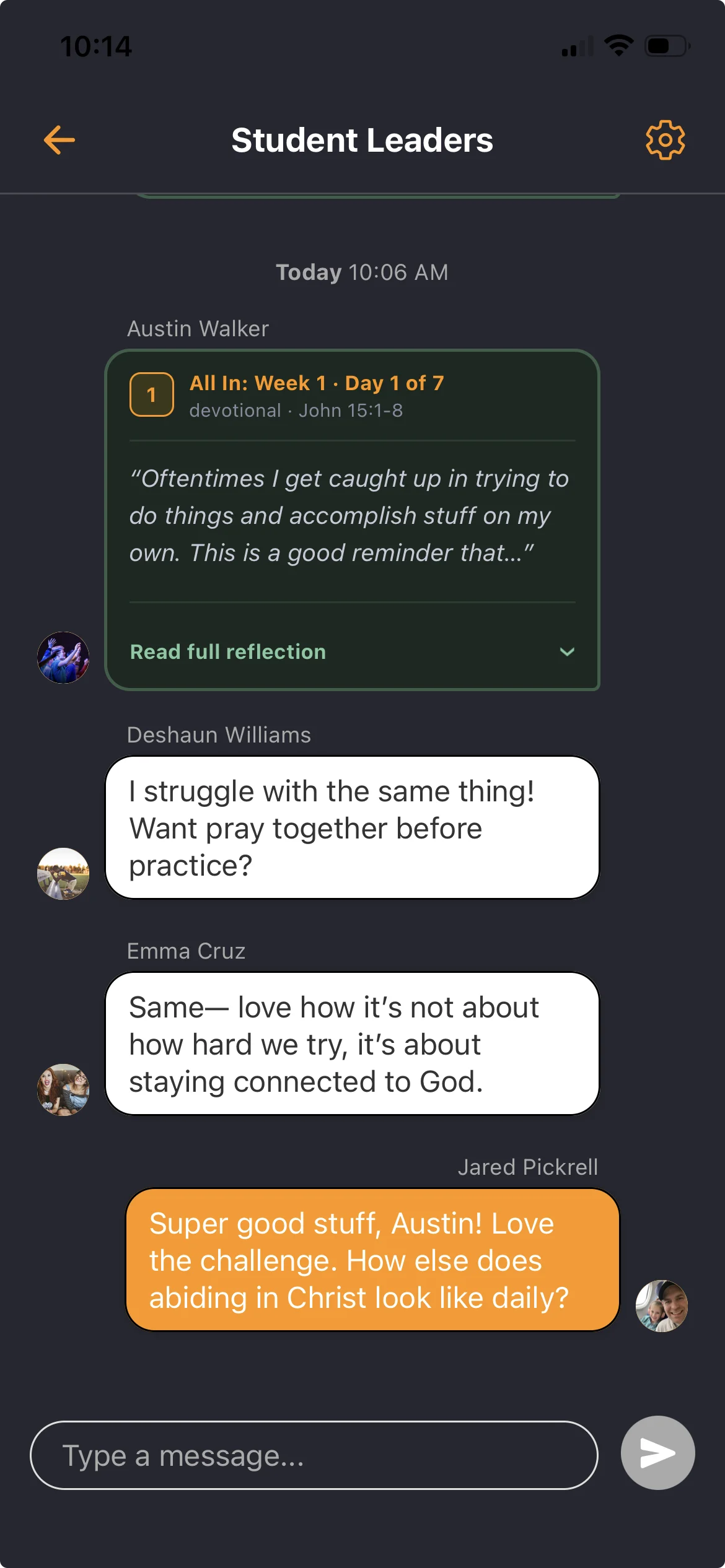
Give Students a Place to Share What They’re Learning
Discipleship isn’t just about reading something and checking a box.
At the end of a Bible Reading Plan or Challenge, students can share their reflections and takeaways with their small group. Other students can read, comment, and encourage one another.
Because sometimes one of the most meaningful parts of discipleship is hearing what God is teaching someone else.
Frequently Asked Questions
Do I have to build Bible Reading Plans from scratch?
No. Fresh Fire provides ready-to-use Bible Reading Plans and Challenges so your youth group can get started right away. The content is gospel-focused, rooted in Scripture, and centered on the major themes of the Bible without a denominational leaning. You can also build your own from scratch if you’d rather start with your own material.
Can I turn my actual sermon notes into a plan?
Yes. You can drop in your sermon notes and let AI create a rough draft of a Bible Reading Plan or Challenge for you to edit and make your own. You bring the teaching — Fresh Fire helps turn it into something students can engage with all week.
Is the ready-to-use content tied to a specific denomination?
No. Fresh Fire’s built-in content is gospel-focused and rooted in Scripture, centered around the major themes of the Bible, without a denominational leaning — so it fits a wide range of youth ministries.
What can I add to a plan besides Scripture?
You can build plans with your own graphics, videos, Scripture, questions, challenges, and sermon notes. Plans aren’t limited to text — you can shape them to match how your students actually engage with content.
How do I see which students are actually engaging?
Once you assign a plan or challenge, Fresh Fire shows you who’s participating and completing it. Instead of wondering whether students are engaging during the week, you can see it directly and follow up with specific students when needed.
Can students see each other’s reflections, or is it leader-only?
Students can share their reflections and takeaways with their small group after completing a plan or challenge, and other students can read, comment, and encourage one another. It’s designed to make discipleship communal, not just something leaders track privately.
Does the AI publish drafts automatically, or do I get to edit first?
You edit first. AI-generated content from your sermon notes is a rough draft — you review and adjust it before assigning it to your students, so what goes out reflects your voice and teaching.
